Jun 8, 2026
|
5
min read
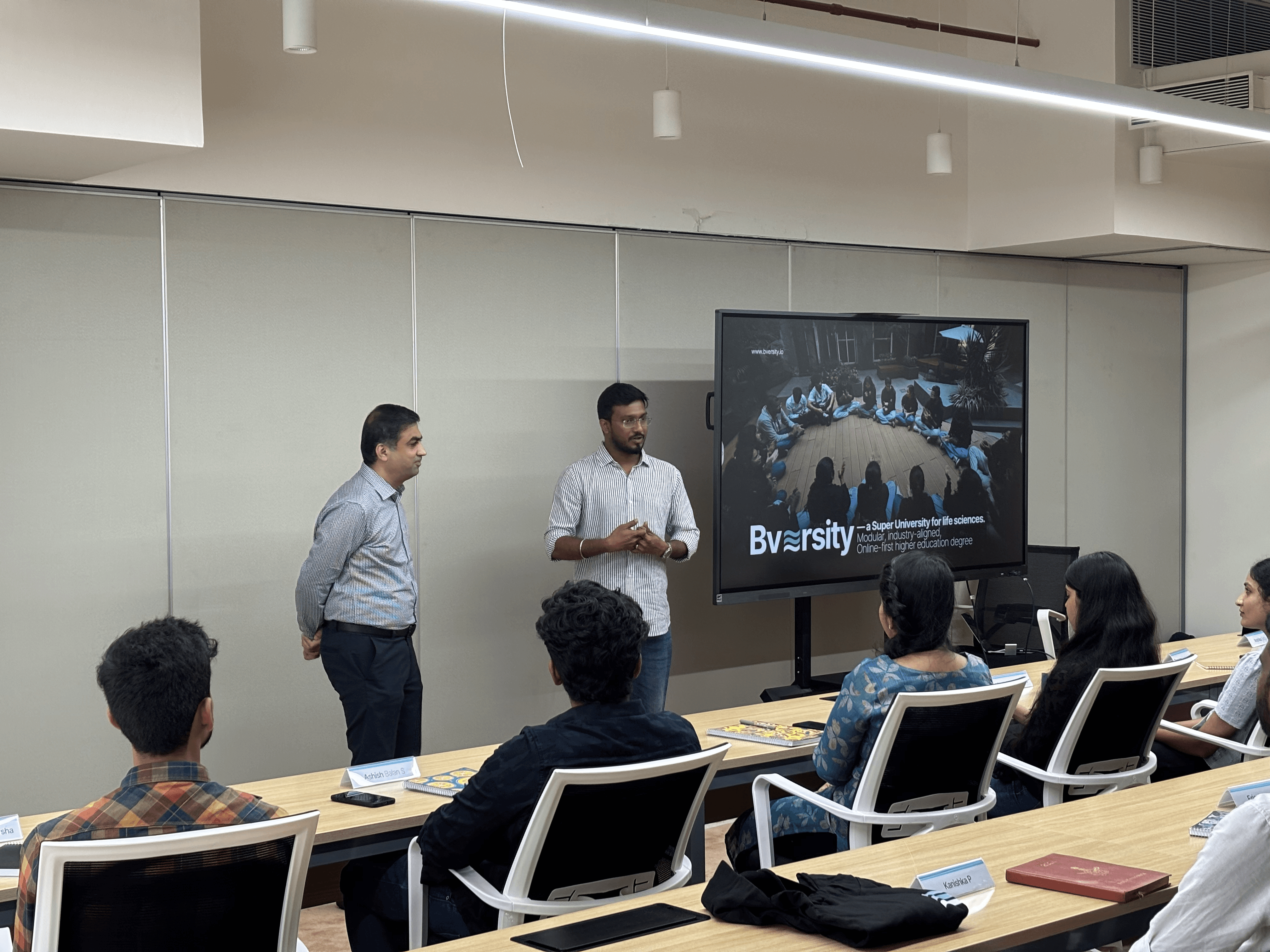
For many students, pursuing an MSc Biotechnology degree is about much more than earning a postgraduate qualification. It is about building a career, gaining confidence, understanding the industry, and becoming ready for the opportunities that exist in modern biotechnology.
The challenge is that not every MSc Biotechnology program is designed with these goals in mind. While many programs provide strong academic foundations, students often find themselves asking an important question after graduation: "How does everything I learned connect to the real biotechnology industry?"
That question has become even more relevant today because biotechnology is evolving rapidly. Fields like genomics, bioinformatics, molecular diagnostics, computational biology, precision medicine, and AI-driven healthcare are creating new opportunities and new expectations from graduates.
As a result, students who are looking for real industry exposure need to evaluate MSc Biotechnology programs differently from previous generations.
Real Industry Exposure Means More Than Industry Visits
When students hear the term "industry exposure," they often imagine company visits, guest lectures, or occasional workshops. While these experiences can be valuable, real industry exposure goes much deeper.
True industry immersion helps students understand how biotechnology functions in professional environments. It allows learners to connect academic concepts with practical applications and develop awareness of how scientific knowledge creates value in healthcare, diagnostics, pharmaceuticals, research, and life sciences.
Real industry exposure should help students gain insights into:
Industry trends and developments
Practical applications of biotechnology
Emerging technologies
Professional expectations
Career pathways
Problem-solving approaches used in real environments
The goal is not simply to observe the industry but to understand how it operates.
The Biotechnology Industry Is Changing Faster Than Many Curriculums
One of the reasons students increasingly seek industry-focused education is because biotechnology itself is evolving at an unprecedented pace.
Today's biotechnology ecosystem includes advancements in:
Genomics and sequencing technologies
Bioinformatics and data analysis
Artificial intelligence in life sciences
Precision medicine
Computational biology
Molecular diagnostics
Digital healthcare solutions
Many traditional educational models struggle to adapt quickly to these changes.
Students therefore need programs that actively help them understand where biotechnology is heading rather than only where it has been.
A strong MSc Biotechnology program should encourage learners to think about future opportunities, emerging technologies, and evolving industry needs throughout their educational journey.
Why Industry-Integrated Learning Creates Better Career Awareness
One challenge many graduates face is a lack of visibility into potential career pathways.
Students may spend years studying biotechnology but still remain uncertain about:
What roles exist within the industry
Which skills are valued by employers
How biotechnology intersects with technology and data science
What emerging fields offer long-term opportunities
How professional environments differ from academic settings
Industry-integrated learning helps address these questions naturally.
When students are exposed to industry perspectives during their studies, they begin developing a clearer understanding of where their interests align and what opportunities they may want to pursue.
This often leads to better decision-making regarding skill development, specialization, and long-term career planning.
The Most Valuable Outcome Is Confidence
One benefit of real industry exposure that is often overlooked is confidence.
Many students graduate with strong theoretical knowledge but feel uncertain when stepping into professional environments. They may know the science but feel unfamiliar with industry expectations and workplace realities.
Confidence grows when students repeatedly engage with practical contexts and industry-oriented thinking.
Through industry-focused learning experiences, students become more comfortable with:
Applying scientific knowledge
Understanding biotechnology challenges
Communicating professionally
Exploring interdisciplinary opportunities
Adapting to changing technologies
This confidence can make a significant difference when students begin internships, interviews, projects, or professional roles.
What We Believe Makes an Industry-Focused MSc Biotechnology Program Different
At Bversity, we believe biotechnology education should not stop at teaching concepts. It should help students understand how those concepts create impact in the real world.
That belief is the foundation behind Bversity’s Industry Immersive MSc in Biotechnology program.
Our approach focuses on helping learners bridge the gap between academic understanding and industry awareness. Rather than treating career preparation as something that happens after graduation, we believe students benefit when professional exposure becomes part of the learning experience itself.
We aim to help learners develop:
A stronger understanding of industry trends
Greater awareness of biotechnology career opportunities
Practical perspectives on modern life sciences
Confidence in navigating professional environments
A future-focused mindset toward biotechnology innovation
For students looking beyond traditional classroom experiences, this approach can create a more meaningful connection between education and career development.
Choosing the Right MSc Biotechnology Program Requires Looking Beyond Rankings
Many students evaluate programs based on rankings, university reputation, or marketing claims alone. While these factors may provide useful information, they do not always reveal how effectively a program prepares students for the realities of modern biotechnology careers.
Instead, students should also consider questions such as:
How much industry integration is included?
Does the program reflect current biotechnology trends?
Will I gain exposure to emerging fields?
How does the learning experience support career readiness?
Does the program help me understand real-world applications of biotechnology?
These questions often provide a clearer picture of the value a program can deliver over the long term.
The Future of Biotechnology Education Is Industry Connected
As biotechnology continues expanding into healthcare, pharmaceuticals, diagnostics, genomics, data science, and computational biology, the expectations placed on graduates will continue evolving as well.
Students who understand both scientific principles and industry realities will likely be better positioned to navigate this changing landscape.
At Bversity, we believe the best MSc Biotechnology program for students seeking real industry exposure is one that helps them build academic depth while also developing practical understanding, industry awareness, and career confidence.
Through our Industry Immersive MSc in Biotechnology program, we aim to create a learning experience that prepares students not only to understand biotechnology, but also to thrive in the industries where biotechnology is shaping the future.