Dec 16, 2025
|
5
min read
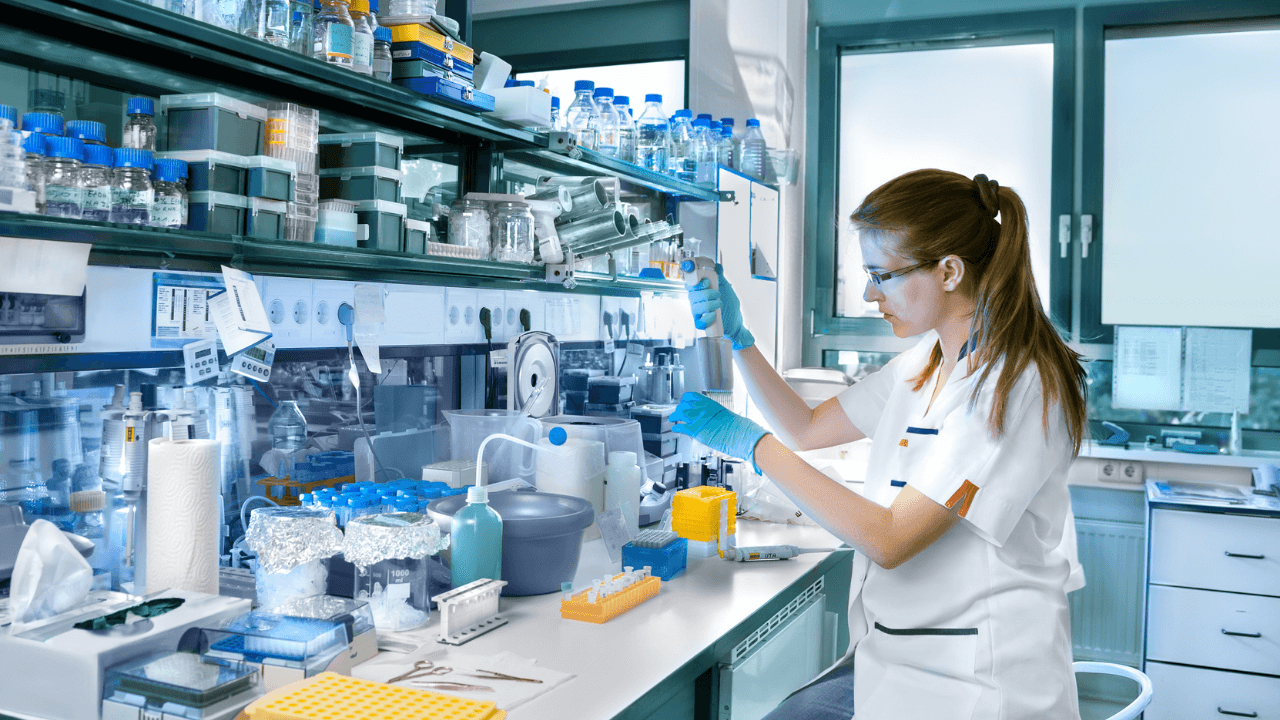
For decades, wet labs have been the heart of biology and healthcare. Pipettes, petri dishes, manual sample handling, and long hours of repetitive testing defined lab life. That model is now changing fast. Artificial intelligence is quietly reshaping how laboratories work, how data is generated, and what skills future scientists actually need.
Recent large-scale AI-powered diagnostic labs, like the new fully automated facilities emerging globally, show us a clear direction. Wet labs are not disappearing, but they are evolving into smarter, more automated, and data-driven environments.
How AI is changing traditional wet lab work
In a traditional lab setup, many processes are manual:
Sample sorting and tracking
Running routine assays
Quality checks done by technicians
Data interpretation done after experiments finish
AI flips this workflow.
Here is what is already changing:
AI-driven automation handles sample processing at massive scale
Real-time quality control flags errors instantly instead of days later
Digital pathology allows tissue analysis without physical slide sharing
Remote collaboration lets experts review results from anywhere
Instead of scientists spending hours on repetitive steps, AI systems handle the heavy lifting while humans focus on interpretation and decision-making.
What wet labs will look like in the near future
Wet labs of the future will not be fully “dry,” but they will be very different from today.
You can expect labs to work like this:
Robots and AI systems run routine experiments
Sensors and software monitor every step in real time
AI models analyze results as data is generated
Scientists step in to validate findings and design next experiments
Wet lab skills will still matter, but manual execution alone will not be enough. Understanding how AI systems operate, how data flows, and how results are interpreted will become part of everyday lab work.
Why students need AI and ML skills now
If you are a life science or biotech student, this shift directly affects your career.
Here is the reality:
Labs are processing millions of samples using automation
AI in healthcare is reducing human error and turnaround time
Hiring is shifting toward people who can work with both biology and data
This means future biotech jobs will favor students who can:
Work alongside AI-driven lab systems
Understand machine learning outputs
Interpret large datasets from experiments
Collaborate with data science and engineering teams
Learning AI and ML does not mean leaving biology behind. It means future-proofing your role in it.
The bigger shift in life sciences
AI in biotech is not just about speed. It is about scale, accuracy, and smarter decision-making. Labs are becoming platforms where biology, software, and automation meet.
For students, the message is simple. If you want to stay relevant in biotech jobs and healthcare labs, you must go beyond traditional wet lab skills. Learning AI and machine learning is no longer optional, it is becoming a core part of modern scientific training.
The future wet lab scientist will be someone who understands biology deeply and knows how to work with intelligent systems that amplify their impact.