Dec 24, 2025
|
5
min read
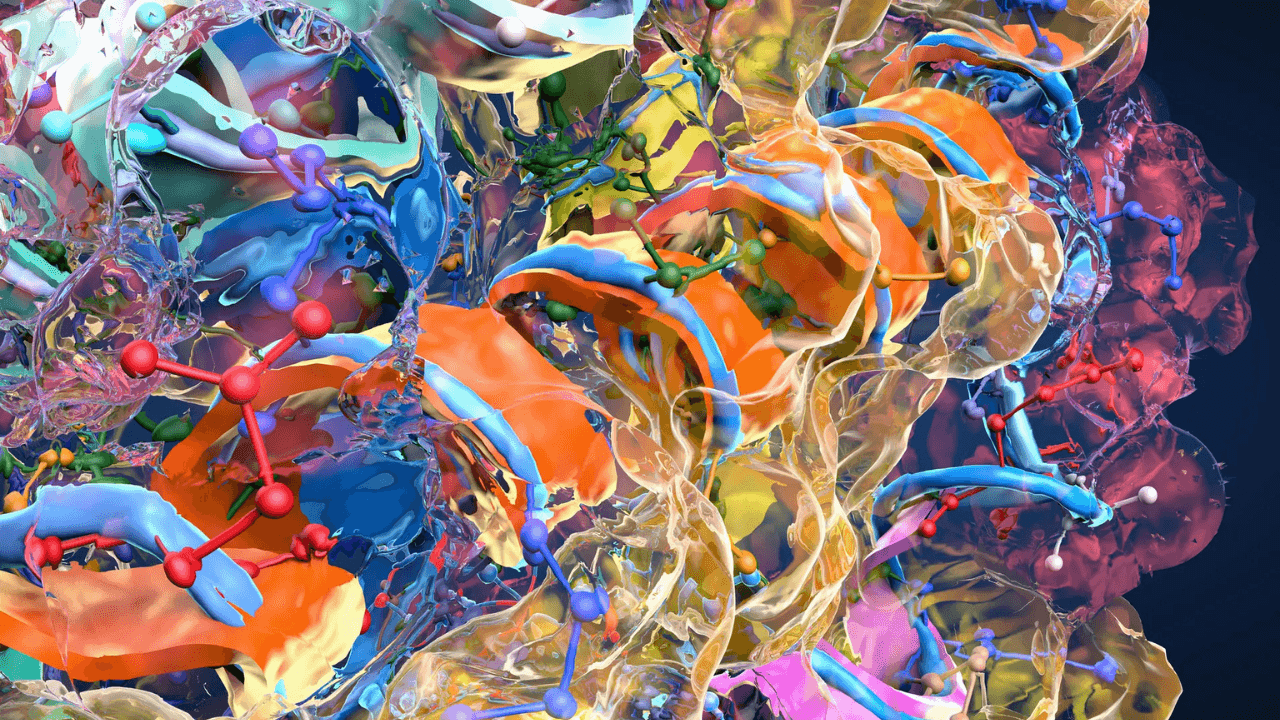
If you are stepping into the dry lab world, there is one tool you simply cannot ignore. AlphaFold.
It has quietly changed how biological research is done and it perfectly shows why AI and biology now move together.
For students building drylab and bioinformatics skills, understanding AlphaFold is no longer optional. It is becoming foundational.
What is AlphaFold and why it matters
AlphaFold is an AI system developed by Google DeepMind in collaboration with EMBL to predict the 3D structure of proteins from their amino acid sequences.
For decades, determining protein structures meant years of wet lab experiments like X-ray crystallography or cryo-EM. AlphaFold solved a problem that scientists struggled with for over 50 years by doing this computationally, faster and at massive scale.
Today, AlphaFold has predicted structures for over 200 million proteins, and these structures are actively used by 3.5 million researchers across 190 countries.
That alone tells you how central this tool has become to modern biology.
Why Google invests so heavily in AI and biology
Big tech companies invest where complexity and data meet real-world impact. Biology has both.
Google sees biology as a system of patterns, interactions, and signals, which is exactly where AI performs best. Protein folding, molecular interactions, and drug design are not just biology problems anymore. They are data problems.
AlphaFold is part of a bigger vision. AI systems are moving from predicting single protein structures to modeling how proteins interact with DNA, RNA, small molecules, and drugs. The long-term ambition is even bigger, simulating entire biological systems, possibly even a human cell.
This explains why AI research in biology is accelerating so fast.
How AlphaFold has evolved beyond protein structures
AlphaFold today is not limited to static protein shapes.
It is now being used to:
Model protein-protein interactions
Study how proteins bind with DNA and RNA
Explore drug binding and target validation
Support early-stage drug discovery decisions
In parallel, newer AI systems have shown that what once took years of lab research can now be explored in days by AI-driven hypothesis generation.
This is a clear signal that drylab workflows are expanding rapidly.
What students should know about AlphaFold
You do not need to build AlphaFold to benefit from it. But you do need to understand how to use it.
As a student, you should know:
What protein structures represent biologically
How predicted structures differ from experimental ones
Where AlphaFold predictions are reliable and where they are not
How to interpret confidence scores
How to integrate structural predictions with genomics or drug research
This knowledge directly strengthens drylab profiles and bioinformatics skills.
How students can use AlphaFold in research and projects
AlphaFold is extremely useful for student-level research and portfolio projects.
You can use it to:
Study structure-function relationships of proteins
Explore mutations and their structural impact
Support genomics or transcriptomics findings
Work on drug target validation ideas
Build drylab projects without expensive lab access
For many students, AlphaFold becomes the bridge between theory and real-world research.
Why AlphaFold matters for dry lab careers
Dry lab roles today expect more than running scripts. They expect biological understanding combined with AI-powered tools. AlphaFold sits exactly at this intersection.
Knowing how to work with tools like AlphaFold shows that you understand how modern biology is done. It signals that you are ready for bioinformatics-driven research, computational biology roles, and AI-assisted biotech workflows.
The bigger picture
AlphaFold is not just a tool. It represents a shift. Biology is becoming computational first. Experiments still matter, but decisions are increasingly guided by models, predictions, and simulations.
For students building careers in drylab research, learning tools like AlphaFold is one of the smartest ways to stay relevant in the next decade.