Dec 23, 2025
|
5
min read

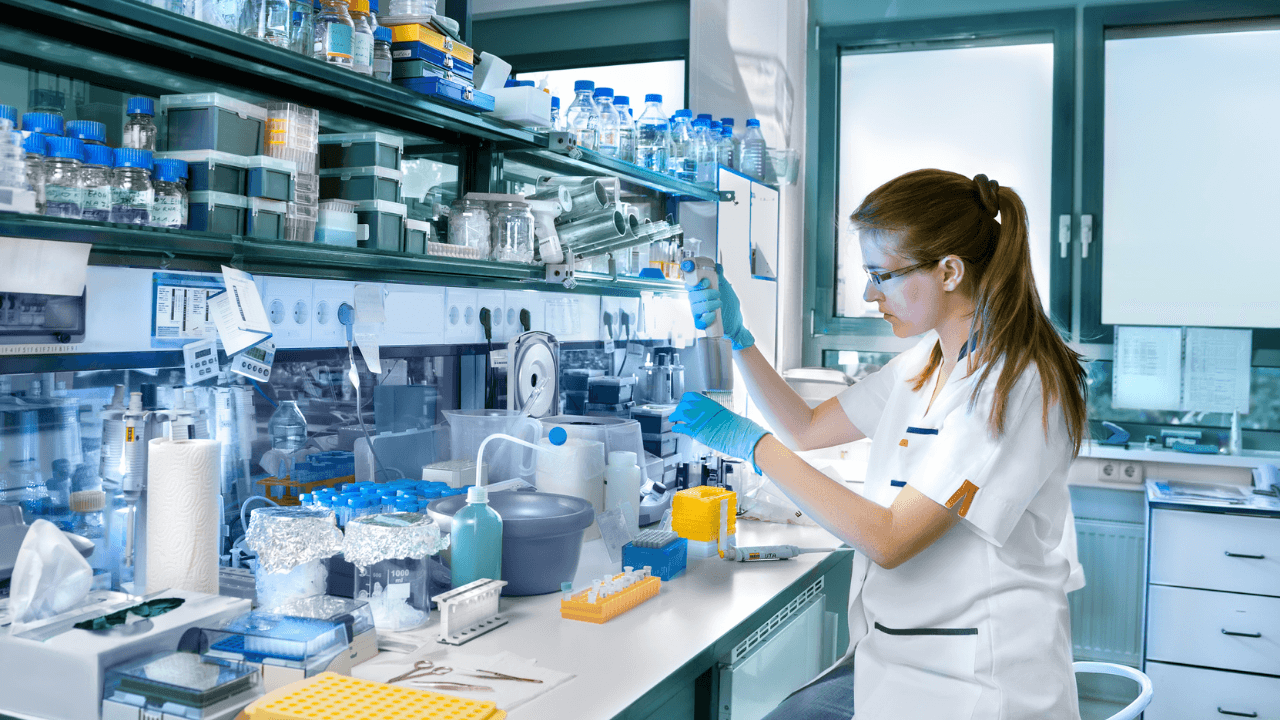
If you ask most life science graduates what skill will get them a job in biotech or pharma, many still say wet lab techniques. Cell culture, PCR, western blotting. These skills are useful, but in 2026, they are no longer the most valuable.
The single most valuable skill for a life science graduate in 2026 is the ability to work with AI and machine learning applied to biology.
This shift is already happening, quietly but fast. Companies are not replacing biology. They are changing how biology is done.
Why wet lab skills alone are no longer enough
Wet lab work is becoming more automated, standardized, and centralized.
Many experiments are now run using automated platforms
CROs and centralized labs handle repetitive experimental work
Entry-level wet lab roles are limited and highly competitive
Growth beyond technician roles is slow without additional skills
This does not mean wet lab skills are useless. It means they are no longer a strong differentiator when applying for biotech job roles in India.
What companies really struggle to hire are people who can interpret data, build models, and make decisions from biological data.
The real most valuable skill, AI and ML for life sciences
AI and machine learning have moved from buzzwords to core tools in biotech and pharma.
Today, AI is used to:
Analyze genomics and transcriptomics data
Predict drug targets and drug responses
Optimize clinical trial design
Detect patterns in patient and imaging data
Reduce drug discovery timelines and costs
Biology now generates massive amounts of data. The people who can turn this data into insights are the ones getting hired faster and paid better.
This is why AI and ML skills, when combined with life science knowledge, have become the most valuable biotech skills.
How AI and ML are already disrupting biotech and pharma
This disruption is not futuristic. It is happening right now.
Drug discovery teams use ML models instead of manual screening
Clinical research uses AI for patient stratification
Diagnostics rely on AI-driven image and signal analysis
Regulatory teams use automation for faster submissions
Many biotech job roles in India today quietly expect familiarity with data analysis, Python, or machine learning concepts, even if the job title does not say AI.
Biotech job roles in India that demand AI-driven skills
If you look closely at hiring trends, these roles are growing faster than traditional wet lab positions:
Bioinformatics analyst
Computational biologist
Clinical data scientist
AI researcher in drug discovery
Genomics data analyst
Digital pathology specialist
All these roles sit at the intersection of biology, data, and AI.
This is where career growth is strongest.
What life science graduates should do now
You do not need to become a hardcore software engineer. You need applied skills that complement biology.
Here is what actually helps:
Learn Python and basic data handling
Understand how machine learning works conceptually
Practice on real biological datasets
Learn how AI is used in genomics, imaging, or drug discovery
Build projects that show applied thinking, not just certificates
The goal is not to leave biology behind. The goal is to upgrade it.
The bottom line
In 2026, the most valuable skill for a life science graduate is not a single wet lab technique. It is the ability to work with AI and machine learning in biological problems.
Graduates who combine biology with AI will access better biotech job roles in India, faster career growth, and more future-proof opportunities.
Those who rely only on traditional lab skills will find the path narrower and slower.
The industry has already decided. The question is whether students will adapt in time.