May 15, 2026
|
6
min read
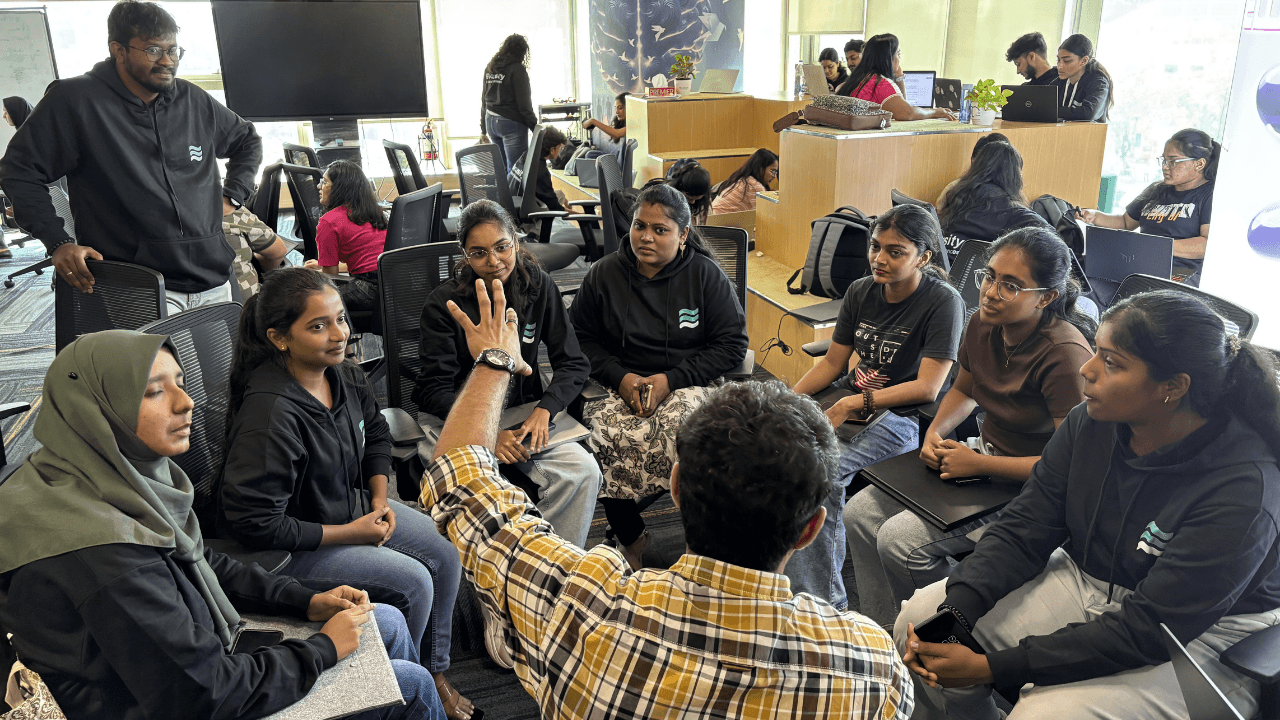
If you search for an MSc Biotechnology program today, you will probably come across the phrase “industry exposure” almost everywhere.
But the real question is:
What does an industry immersive MSc Biotechnology program actually look like in day-to-day learning?
For many students, the term sounds exciting, but also vague.
Does it simply mean a few guest lectures? A short internship? A workshop once in a semester?
At Bversity, we believe industry immersion should be much deeper than that.
It should not feel like something separate from the course.
It should become part of the learning journey itself.
That is exactly how Bversity’s Industry Immersive MSc in Biotechnology is designed.
Instead of focusing only on classroom-based academics, the program is built to gradually move learners closer to real biotech work environments over the course of two years.
So, What Does “Industry Immersive” Actually Mean?
In a traditional MSc Biotechnology program, learning often stays heavily focused on theory, exams, and academic concepts.
An industry immersive program works differently.
The idea is simple: Students should not wait until graduation to understand how the biotech industry functions.
They should experience:
Real-world projects
Industry workflows
Mentorship from professionals
Team-based collaboration
Practical problem-solving
Exposure to biotech tools and technologies
while they are still studying. That changes the entire learning experience. Instead of only preparing for semester exams, learners gradually start preparing for Biotechnology careers in a much more practical way.
What Makes Bversity’s MSc Biotechnology Program Different?
At Bversity, the goal is not just to help students complete a Masters in Biotechnology. The goal is to help them understand how modern biotechnology actually works in the industry.
That is why the program combines:
Academic foundations
Industry projects
Mentorship
Applied learning
Internship exposure
Career readiness
The structure is designed to reduce the gap between studying biotechnology and working in biotechnology.
How the Learning Journey Works Semester by Semester
One of the biggest differences in an industry immersive program is how the learning evolves over time.
Instead of staying completely theory-focused throughout the degree, the experience gradually becomes more practical and industry-oriented.
Semester 1: Building the Foundations
The first semester focuses on helping learners build strong fundamentals while also introducing them to the computational and modern side of biotechnology.
Students begin understanding how biology connects with:
Data
Technology
Programming
AI-assisted workflows
This phase is important because modern biotechnology careers increasingly require interdisciplinary thinking.
At this stage, learners are not just memorising concepts.
They are starting to understand where those concepts are actually used.
Semester 2: Moving Toward Real-World Application
In the second semester, the learning starts becoming more application-oriented.
Students begin working with:
Biological datasets
Industry-style workflows
Practical assignments
Real-world use cases
This is where learners slowly move beyond textbook understanding and begin developing problem-solving ability.
The focus shifts from:
“Can you understand the concept?” to: “Can you apply the concept in realistic scenarios?”
That transition is extremely important in Biotechnology careers today.
Semester 3: Industry Immersion Becomes Stronger
By the third semester, learners begin experiencing something much closer to real biotech work environments.
This phase includes:
Industry-level projects
Collaboration-based learning
Mentorship from professionals
Project presentations
Exposure to advanced biotech applications
Students begin interacting more closely with the kind of workflows and expectations seen inside biotech companies. This stage often becomes a turning point because learners start gaining confidence through actual execution, not just theory.
Semester 4: Becoming Industry Ready
The final semester focuses heavily on experiential learning and independent project ownership.
By this stage, learners are expected to:
Work on larger capstone projects
Handle real-world biotech challenges
Build stronger portfolios
Prepare for Biotechnology jobs and interviews
The goal is to help students graduate with practical confidence, not just academic completion. Instead of asking: “What should I do after my MSc Biotechnology?” students are already much closer to understanding the type of roles and domains they want to enter.
Features of Bversity’s Industry Immersive MSc Biotechnology Program
A lot of students ask what makes the experience feel truly “industry immersive.” At Bversity, that comes from multiple layers working together throughout the program.
Some key highlights include:
1:1 mentorship from biotech professionals
70+ industry interactions annually
Industry-integrated immersive weeks
Practical assignments and capstone projects
Internship and work-integrated learning opportunities
Portfolio-focused learning
Exposure to modern biotech workflows
The important part is that these are not isolated activities added at the end. They are integrated into the learning structure itself.
Why This Matters for Biotechnology Careers
The biotech industry today is changing rapidly.
Companies increasingly expect graduates to:
Adapt quickly
Understand practical workflows
Work across interdisciplinary teams
Solve real-world problems
Handle modern biotech tools and technologies
That is why many students now look for Masters in Biotechnology programs that offer more than theoretical learning alone.
An industry immersive structure helps students gain:
Better clarity about career paths
More practical confidence
Real exposure before graduation
Stronger preparation for Biotechnology jobs
It creates a smoother transition from student life into professional environments.
The Bigger Shift Happening in MSc Biotechnology Education
The future of MSc Biotechnology education is slowly moving toward:
Applied learning
Industry collaboration
Practical exposure
Real-world projects
Mentorship-driven ecosystems
Students no longer want to spend two years studying without understanding how the industry actually functions. They want learning experiences that feel connected to real careers.
That is exactly the gap programs like Bversity’s Industry Immersive MSc in Biotechnology are trying to solve.
Final Thoughts
An industry immersive MSc Biotechnology program is not just about adding internships or industry talks to a traditional degree.
It is about redesigning the entire learning journey to stay closer to real biotech environments from the beginning.
At Bversity, the focus is on helping learners gradually move from:
Learning concepts → Applying concepts → Solving real problems → Becoming industry ready
Because in modern biotechnology, practical readiness matters just as much as academic knowledge.