A story of Glucose, Insulin and Cancer Cell Growth
In the complex realm of cancer biology, one narrative stands out as a critical and intriguing subplot: the relationship between glucose, insulin, and the growth of cancer cells. This story not only provides valuable insights into the development and progression of cancer but also underscores the importance of understanding the intricate web of interactions within our bodies.
The Role of Glucose
Glucose is the primary source of energy for our cells. It's a simple sugar derived from the foods we eat, especially carbohydrates. Glucose circulates in our bloodstream and is transported into cells, where it undergoes a series of chemical reactions, producing adenosine triphosphate (ATP), the cellular "currency" of energy. Our cells rely on glucose to function, and maintaining a balanced level of blood glucose is crucial for overall health.
The Insulin Connection
Insulin, a hormone produced by the pancreas, plays a pivotal role in regulating glucose levels in the bloodstream. When we consume carbohydrates, our blood sugar levels rise, prompting the release of insulin. Insulin acts like a key, allowing glucose to enter cells. This process keeps blood glucose within a narrow range, preventing it from reaching dangerously high levels, which can be harmful.
Cancer Cells and Glucose
Cancer cells, like all cells, require a constant supply of energy to grow and divide. What makes them unique is their voracious appetite for glucose. Unlike normal cells, cancer cells often exhibit a phenomenon known as the Warburg effect. This means they preferentially metabolize glucose through a process called glycolysis, even in the presence of oxygen, which would normally lead to more efficient energy production through oxidative phosphorylation.
Glycolysis is an ancient and less efficient way of generating ATP, but it has an advantage for rapidly dividing cancer cells. It produces not only energy but also intermediates that are crucial for building new cellular components. The abundance of glucose and the tendency of cancer cells to favor glycolysis create a fertile environment for their growth and proliferation.
The Connection to Insulin Resistance
Here's where the insulin piece of the puzzle comes into play. Insulin resistance is a condition in which the body's cells become less responsive to insulin. As a result, the pancreas produces more insulin to help glucose enter cells. This can lead to elevated levels of both glucose and insulin in the bloodstream, a situation frequently observed in individuals with type 2 diabetes.
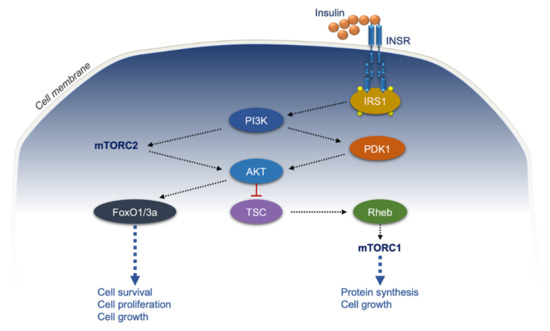
Recent research has uncovered a critical connection between insulin resistance and cancer. Insulin, aside from its role in glucose regulation, also acts as a growth factor. High levels of insulin, such as those seen in insulin-resistant individuals, can provide cancer cells with an extra push to proliferate. In essence, insulin resistance can create a favorable microenvironment for cancer cells by supplying them with additional growth signals.
https://www.mdpi.com/ijms/ijms-22-11137/article_deploy/html/images/ijms-22-11137-g001-550.jpg
Fig2: Role of Insulin receptor signalling in Cancer
The Implication for Cancer Risk
The story becomes even more compelling when we consider its implications for cancer risk. Insulin resistance is not solely linked to type 2 diabetes. It is a condition that can affect anyone, including those with prediabetes or even individuals with normal blood glucose levels but a genetic predisposition to insulin resistance.
Numerous epidemiological studies have shown a correlation between insulin resistance and an increased risk of several types of cancer, including breast, colon, pancreatic, and liver cancer, among others. The mechanisms underlying this link are still being explored, but the story of glucose, insulin, and cancer cell growth appears to play a significant role.
Conclusion
The story of glucose, insulin, and cancer cell growth is a multifaceted narrative in the world of cancer biology. It reveals the intertwined relationship between our metabolism, hormonal signaling, and the complex behavior of cancer cells. While there is much to learn and discover, this narrative highlights the potential impact of dietary and therapeutic interventions on cancer prevention and treatment.
MD: Discover the interdependence of Glucose, Insulin and their role in cancer cell growth.
 Basics of Behavioural Genetics
 Benign vs. Malignant Tumors: Understanding the Critical Distinction
 Can Viruses Cause Cancer?