Empowering Precision Medicine with Genome Sequencing
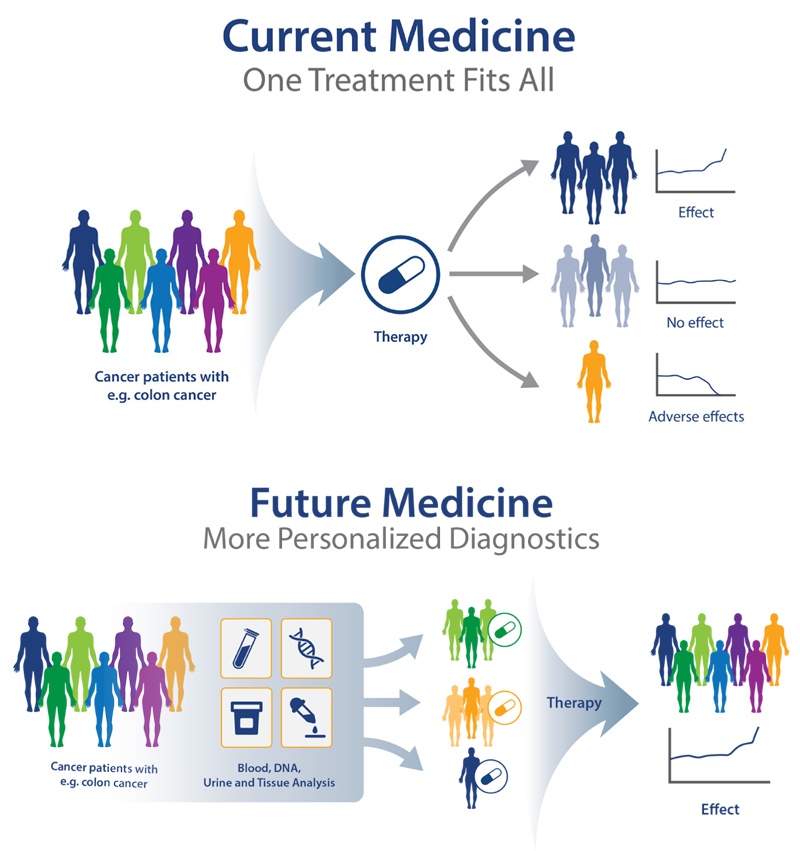
Genome sequencing has emerged as a transformative tool in the realm of precision medicine, offering unprecedented insights into an individual's genetic makeup. This revolutionary approach allows healthcare providers to tailor medical treatments to a patient's unique genetic profile, leading to more effective and personalised care. If we talk about traditional medicine, it often employs one-size-fits all treatments, meaning that a particular treatment for a disease may work for one group of people and may not work for others, as it is developed based on how the average population reacts to the drug. But precision medicine recognises the individuality of patients. Next Generation Sequencing (NGS) opens new doors for precision medicine as personalised treatment plans depend on one’s genetic make-up and allow treatments to be tailored to a patient’s genetic characteristics. Personalised medicine can maximise treatment efficacy while minimising side effects. Genetic information guides the selection of therapies, dosages, and treatment strategies.
https://blog.crownbio.com/hubfs/assets/current-medicine.jpg
Fig. 1: Difference between Traditional Medicine and Precision Medicine
A central element of personalised medicine involves analysing an individual's genetic information. This allows healthcare providers to identify genetic variations that may influence disease risk and treatment response. With a patient's genomic profile in mind, healthcare professionals can prescribe medications and therapies that are more likely to be effective and have fewer side effects. Personalised medicine extends to preventive measures, helping individuals understand their genetic predisposition to certain diseases and guiding lifestyle choices accordingly. Genetic testing can enable early disease detection, facilitating timely interventions and improved outcomes. This approach puts the patient at the centre of healthcare decisions, fostering a more collaborative doctor-patient relationship.
Sequencing techniques
High-throughput DNA sequencing: High-throughput DNA sequencing technologies, including next-generation sequencing (NGS) and third-generation sequencing, have made genome sequencing faster and more cost-effective, as they can sequence multiple genes at once.
Whole genome sequencing: The Human Genome Project, completed in 2003, marked a significant milestone in genomics, providing a reference genome for comparison. WGS analyses an individual's entire genome, identifying all genetic variations, including single nucleotide polymorphisms (SNPs), insertions, deletions, and structural variants.
Exome sequencing: Exome sequencing focuses on the protein-coding regions of the genome, where most disease-causing mutations are found. It is a cost-effective alternative to WGS.
Fig 2: https://genxpro.net/wp-content/uploads/2015/07/precision_medicine1.jpg
Applications of genome sequencing in precision medicine
- Genomic profiling of tumours aids in targeted therapies, immunotherapies, and prognosis. Liquid biopsies enable the monitoring of cancer progression and treatment response.
- Genome sequencing aids in diagnosing rare genetic diseases with elusive symptoms. It helps identify causative mutations and guides treatment decisions.
- Genetic variations influence drug metabolism and response. Pharmacogenomic data help prescribe the most effective and safe medications.
- Genomic surveillance of pathogens aids in tracking disease outbreaks and designing vaccines. It contributes to the understanding of disease transmission dynamics.
- Predictive genomics assesses an individual's risk of developing specific conditions. It guides lifestyle and preventive measures.
Understanding the clinical significance of genetic variations requires expertise. The interpretation of variants remains a challenge. Protecting genetic data from breaches and misuse is a critical concern. Ensuring that all populations have equal access to genomic medicine is a priority. Patients should have a clear understanding of the implications of genetic testing.
Future directions
Combining genomic data with other omics data (e.g., transcriptomics, proteomics) enhances our understanding of disease mechanisms. AI and machine learning are being employed to analyse vast genomic datasets, improving diagnostics and treatment recommendations. Large-scale genomic studies are elucidating the genetic basis of common diseases and population-specific variations. Advanced gene editing techniques like CRISPR-Cas9 hold potential for correcting disease-causing mutations.
Conclusion
Genome sequencing is at the forefront of the precision medicine revolution, offering a deeper understanding of the genetic underpinnings of health and disease. As technology advances and our knowledge of genomics expands, the integration of genomic data into routine clinical care will become increasingly common. Precision medicine is poised to transform healthcare, providing patients with tailored treatments and therapies that maximise benefits and minimise risks. With continued research, ethical considerations, and equitable access, the future of medicine holds the promise of truly personalised care through genome sequencing.
MD: The super power in precision medicine is genome sequencing. Your medical care can be customised to fit your specific genetic profile.
 A story of Glucose, Insulin and Cancer Cell Growth
 Basics of Behavioural Genetics
 Benign vs. Malignant Tumors: Understanding the Critical Distinction