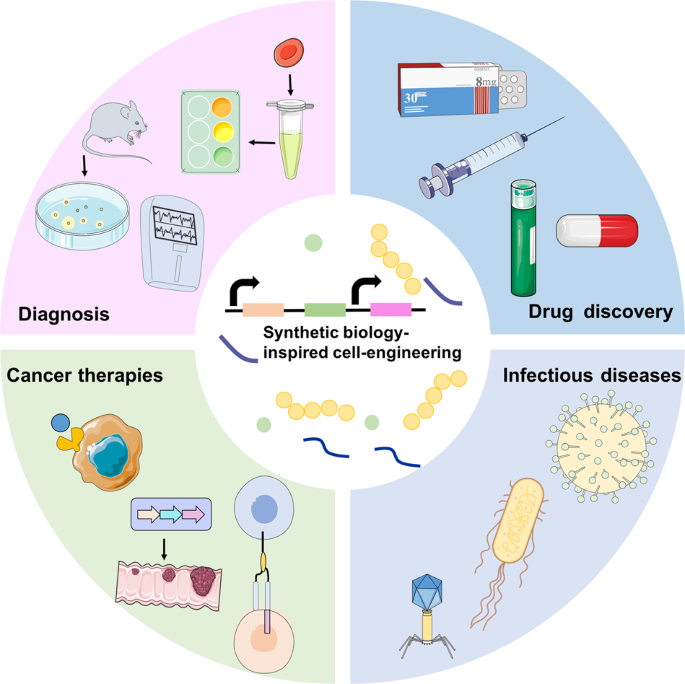
Exploration of Synthetic Biology Advancements

Synthetic biology is an interdisciplinary field that blends principles from biology, engineering, and computer science to create new biological components, devices, and systems. Over the years, synthetic biology has made significant strides across various applications, with pharmaceuticals being one of the most promising domains. This article delves into the progress of synthetic biology, with a specific focus on its implications and potential in the pharmaceutical sector.
Fig1: https://ars.els-cdn.com/content/image/3-s2.0-B978012804659300004X-f04-01-9780128046593.jpg
Synthetic biology vs Genome editing
Synthetic biology is quite similar to genome editing, as both techniques change the genetic material of an organism. But they are differentiated based on how they create change. In synthetic biology, researchers construct lengthy DNA stretches from different DNA pieces and insert them into the genome of an organism. These newly produced or synthesised DNA fragments may contain genes that are already present in other animals, or they may be completely new. In genome editing, a tool is often used to make modest modifications to the organism's own DNA. Small regions of DNA in the genome can also be added or removed using techniques for genome editing.
The evolution of synthetic biology
Synthetic biology emerged in the early 21st century as a natural progression from genetic engineering and molecular biology. While genetic engineering primarily involved manipulating existing biological components, synthetic biology aimed to construct entirely new biological entities and systems from scratch. Researchers initially entered this field to deepen their understanding of biological systems and engineer novel organisms for various applications.
Key Advancements in Synthetic Biology
DNA Synthesis and Assembly: Among the fundamental advancements in synthetic biology is the refinement of DNA synthesis and assembly techniques. These developments have revolutionised the capacity to construct complex genetic circuits and make precise and rapid modifications to organisms.
Standardised Biological Parts: The introduction of standardised biological components, known as BioBricks, has streamlined the process of assembling genetic circuits. Researchers can now use these standardised building blocks to create customised biological systems.
Genome editing tools: The advent of CRISPR-Cas9 and similar genome editing tools has transformed the landscape of synthetic biology. These tools empower researchers to make precise and targeted modifications to an organism's DNA, opening up new possibilities for genetic engineering.
Automation and High-Throughput Screening: The integration of automation has significantly increased the efficiency of synthetic biology experiments. Researchers can now design, construct, and test thousands of genetic variations in a fraction of the time it would take through manual methods.
Computational Tools: Computational tools and algorithms play a pivotal role in synthetic biology. They assist in designing and simulating genetic circuits, predicting the behaviour of engineered organisms, and optimising biological systems.
https://ars.els-cdn.com/content/image/1-s2.0-S1367593115000514-fx1.jpg
Fig2: RNA based synthetic biology
Applications of Synthetic Biology in Pharmaceuticals
The pharmaceutical industry has swiftly recognised the potential of synthetic biology, leading to numerous groundbreaking applications. Synthetic biology enables the engineering of microorganisms to produce pharmaceutical compounds, including antibiotics, anticancer drugs, and vaccines. These genetically modified microorganisms serve as cost-effective and sustainable production platforms. Synthetic biology facilitates the development of targeted therapies that respond to specific disease markers. This precision medicine approach reduces side effects and enhances treatment efficacy. High-throughput screening of genetically engineered organisms accelerates drug discovery efforts. Researchers can create biosensors to identify potential drug candidates and subject them to more efficient screening. Synthetic biology has led to the establishment of biological factories where engineered organisms manufacture complex molecules such as proteins, enzymes, and antibodies. These molecules find applications in both drug development and diagnostics.
Case Studies in Synthetic Biology and Pharmaceuticals
Artemisinin Production: In 2013, researchers achieved a groundbreaking feat by engineering yeast to synthesise artemisinin, a vital component in malaria treatments. This accomplishment underscored the potential of synthetic biology, particularly in regions with resource constraints, for drug production.
Anti-Cancer Drug Production: Synthetic biology has also been harnessed for the production of anti-cancer drugs such as paclitaxel. Through the engineering of microbes to biosynthesise these compounds, researchers have managed to reduce both the environmental impact and production costs.
Insulin Production: Genetically modified bacteria have been harnessed for insulin production, benefiting diabetic patients by enhancing the availability and affordability of this life-saving medication.
Vaccine development: Synthetic biology has propelled the accelerated development of vaccines, as evident in the swift creation of mRNA vaccines for COVID-19. These vaccines represent a groundbreaking application of genetic engineering in response to a global health crisis.
Conclusion
The advancements in synthetic biology have unlocked a multitude of opportunities for the pharmaceutical sector. From drug production and personalised medicine to the rapid development of vaccines, synthetic biology has redefined how we approach healthcare and drug discovery. However, these strides necessitate unwavering adherence to research integrity standards, including stringent plagiarism checks. This ensures that the field of synthetic biology advances with ethical responsibility, continuing to usher in groundbreaking innovations within the pharmaceutical and healthcare domains. Synthetic biology, as it upholds the highest ethical standards, stands poised to unlock a plethora of possibilities in the realm of pharmaceuticals.
MD: Synthetic biology's remarkable advancements are reshaping pharmaceuticals, from drug production and precision medicine to vaccine development. Discover the evolution of synthetic biology and its pivotal role in engineering microorganisms for sustainable pharmaceutical compound production.
 A story of Glucose, Insulin and Cancer Cell Growth
 Basics of Behavioural Genetics
 Benign vs. Malignant Tumors: Understanding the Critical Distinction