Role of Single-Cell RNA Sequencing (scRNA-Seq) in understanding disease mechanisms

In the realm of biomedical research, understanding the complex mechanisms of underlying diseases is crucial for the development of targeted therapies and improved patient care. Recent technological advancements have significantly enhanced our ability to explore the molecular intricacies of diseases, with single-cell RNA sequencing (scRNA-Seq) emerging as a transformative tool. This cutting-edge technology enables researchers to study the complexities of cellular heterogeneity, identify disease-specific signatures, and unravel the mechanisms driving various pathologies.
Understanding Single-Cell RNA Sequencing (scRNA-Seq)
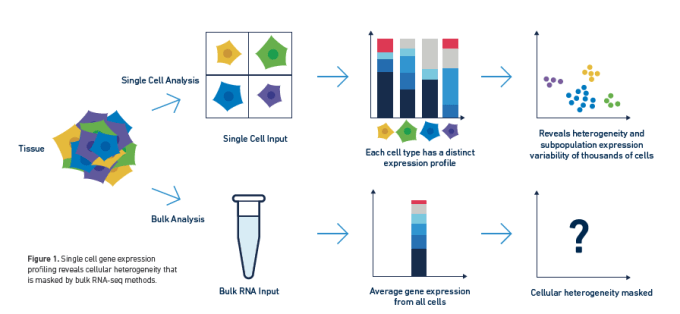
Traditional bulk RNA sequencing offers a broad overview of the way genes are expressed within a population of tissues or cells, but it lacks the depth needed to understand the heterogeneity found in complex biological systems. The transcriptomes of individual cells are examined by scRNA-Seq, which provides unique insights into cellular variety, dynamics, and function.
How does scRNA-Seq work?
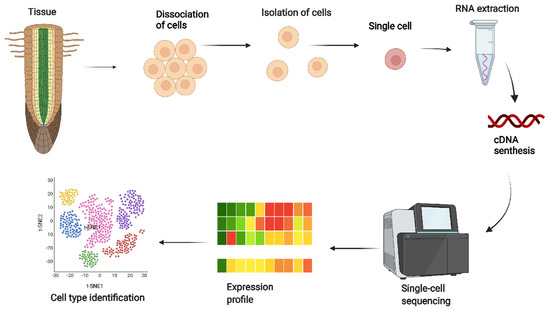
Cell Isolation: The process begins with the isolation of single cells from the tissue of interest. This can be achieved through various techniques, including fluorescence-activated cell sorting (FACS) or microfluidics.
Library Preparation: Next, the RNA from each isolated cell is converted into complementary DNA (cDNA) and amplified. Unique molecular identifiers (UMIs) are often introduced to distinguish individual RNA molecules.
Sequencing: The cDNA libraries are then subjected to high-throughput sequencing, generating vast amounts of data.
Data Analysis: Finally, bioinformatics tools are employed to process and analyze the sequencing data, resulting in comprehensive single-cell expression profiles.
https://www.mdpi.com/ijms/ijms-23-04497/article_deploy/html/images/ijms-23-04497-g001-550.jpg
Applications of scRNA-Seq in Disease Research
1. Uncovering Cellular Heterogeneity: Cellular heterogeneity is a hallmark of various diseases, including cancer, neurodegenerative disorders, and autoimmune conditions. scRNA-Seq enables researchers to identify distinct cell populations within a tissue, uncover rare cell types, and characterize their unique gene expression profiles. This newfound granularity aids in understanding disease initiation, progression, and response to treatment.
2. Identifying Disease Biomarkers: By comparing healthy and diseased tissues at the single-cell level, scRNA-Seq identifies disease-specific gene signatures and biomarkers. These molecular markers can serve as diagnostic tools, prognostic indicators, and potential therapeutic targets. For example, in cancer research, scRNA-Seq has led to the discovery of specific gene expression patterns associated with tumor aggressiveness and drug resistance.
3. Studying Cellular Dynamics: Diseases are often dynamic processes, and scRNA-Seq provides a time-resolved view of cellular changes. Researchers can track how cell populations evolve during disease progression or in response to treatments. This dynamic information is critical for designing interventions that target specific disease stages.
4. Unravelling Immune Responses: In infectious diseases and autoimmune disorders, scRNA-Seq elucidates the intricacies of immune cell responses. It uncovers how different immune cell types interact, how they change during the course of an infection, and how they contribute to tissue damage or protection. This knowledge informs the development of immunotherapies and vaccines.
5. Drug Discovery and Development: scRNA-Seq plays a pivotal role in drug discovery by revealing the molecular mechanisms underlying diseases. It aids in the identification of potential drug targets and the assessment of drug efficacy at the single-cell level. This personalized approach to drug development holds promise for tailoring treatments to individual patients.
Case Studies: scRNA-Seq in Action
1. Cancer Biology: Cancer is characterized by cellular heterogeneity, making it an ideal candidate for scRNA-Seq studies. Researchers have used this technology to dissect tumor ecosystems, identifying rare cancer stem cells and understanding how different cell populations contribute to tumor growth and therapy resistance. scRNA-Seq has also guided the development of immunotherapies by uncovering immune cell responses within the tumor microenvironment.
2. Neuro-degenerative Diseases: In neurodegenerative diseases like Alzheimer's and Parkinson's, scRNA-Seq has revealed the diversity of cell types in the brain and how they are affected by disease. It has shed light on the role of specific cell populations, such as microglia and astrocytes, in neuroinflammation and neuronal damage. These findings hold potential for developing targeted therapeutics.
3. Infectious Diseases: During viral infections like COVID-19, scRNA-Seq has been instrumental in understanding host-pathogen interactions. Researchers have used this technology to examine how the virus infects different cell types, triggers immune responses, and leads to tissue damage. Insights gained from scRNA-Seq studies have informed the development of antiviral drugs and vaccines.
Conclusion
Single-cell RNA sequencing has emerged as a transformative technology that is reshaping our understanding of disease mechanisms. By dissecting cellular heterogeneity, identifying biomarkers, and revealing dynamic processes, scRNA-Seq offers invaluable insights for disease research and drug development. As technology continues to advance and our knowledge deepens, scRNA-Seq holds the potential to unlock new therapeutic strategies and improve patient outcomes across a spectrum of diseases.
MD: Single-cell RNA sequencing (scRNA-seq) is a powerful technique used to analyze gene expression at the single-cell level. Discover how this technology works and its applications in biological research.
 A story of Glucose, Insulin and Cancer Cell Growth
 Basics of Behavioural Genetics
 Benign vs. Malignant Tumors: Understanding the Critical Distinction