The Elegance of DNA Structure
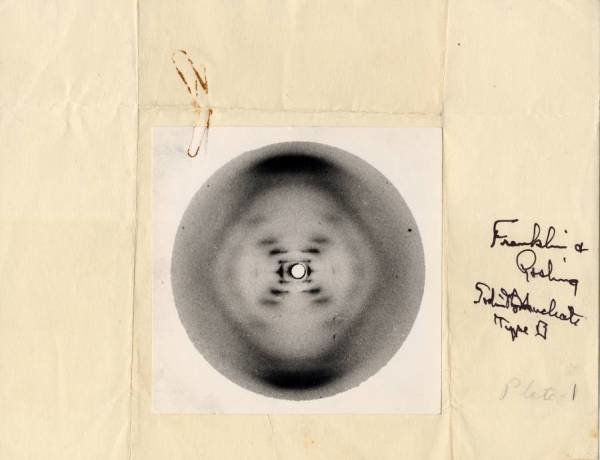
We have come a long way from discovering to isolating to editing the “factor” which is responsible for our own existence or what scientists call an inheritance factor, our own “DNA”. Deoxyribonucleic acid, or DNA, is a remarkable molecule that serves as the genetic blueprint for all known life forms on Earth. The structure of DNA, first elucidated by James Watson and Francis Crick in 1953. But in reality, it was Rosalind Franklin who discovered the structure of DNA using X-Ray diffraction. Anyway, the discovery of DNA structure has unlocked the secrets of heredity and provided critical insights into genetics, evolution, and cellular processes.
https://www.fluter.de/sites/default/files/photograph-51.jpg
Fig1: The first structure of DNA observed by Rosalind Franklin
The Components of DNA
DNA is composed of four nucleotide bases: adenine (A), cytosine (C), guanine (G), and thymine (T). These bases pair up in a complementary fashion, with A always pairing with T and C always pairing with G. This base-pairing forms the rungs of the DNA ladder-like structure, which is further stabilized by the sugar-phosphate backbone. This specific and predictable base-pairing is a fundamental feature of DNA, as it allows for the accurate replication and transmission of genetic information.
The Double-Helix Structure
The most iconic feature of DNA is its double-helix structure, resembling a twisted ladder or spiral staircase. This structure was first described by Watson and Crick (yeah, they were the first to describe it), and it is essential to the molecule's function. The two long chains of nucleotides wind around a common axis in a right-handed helical manner, forming a stable and highly efficient structure for storing genetic information.
The double helix consists of two antiparallel strands, meaning they run in opposite directions. One strand runs from the 5' end (five prime) to the 3' end (three prime), while the other strand runs from the 3' end to the 5' end. The phosphate groups in the sugar-phosphate backbone form the outer edges of the double helix, while the nitrogenous bases are found on the interior, paired up across the centre.
https://www.shutterstock.com/image-vector/dna-structure-nitrogenous-base-thymine-adenine-2227395245
Base Pairing and Complementarity
The base pairs that make up the DNA double helix adhere to the principle of complementarity. Adenine (A) pairs with thymine (T) via two hydrogen bonds, while cytosine (C) pairs with guanine (G) through three hydrogen bonds as shown above in the Figure2. This base pairing is highly specific and ensures that the genetic information is accurately maintained during DNA replication. This means that the sequence of bases on one strand automatically dictates the sequence on the complementary strand, leading to an exact copy of DNA during cell division.
Importance in Genetics
The structure of DNA is fundamentally important to genetics. It serves as a repository for an organism's genetic information, encoding the instructions necessary for the development, growth, and functioning of an organism. The sequence of bases in DNA determines the sequence of amino acids in proteins, which are the workhorses of cellular processes. Genetic mutations, which can have profound effects on an organism, occur when changes in the DNA sequence disrupt its normal functioning.
Conclusion
The structure of DNA, with its elegant double-helix configuration, is a marvel of nature. This remarkable molecule encodes the genetic information that governs life on Earth. Its complementarity and base-pairing rules ensure the faithful transmission of genetic instructions, underpinning the processes of replication, gene expression, and the development of all living organisms. The study of DNA structure has transformed our understanding of genetics, evolution, and molecular biology, and it continues to be at the forefront of scientific research and innovation.
MD: Read about the fascinating world of DNA’s molecular architecture. The article provides a comprehensive understanding of its structure.
 A story of Glucose, Insulin and Cancer Cell Growth
 Basics of Behavioural Genetics
 Benign vs. Malignant Tumors: Understanding the Critical Distinction