Unlocking healing potential by Stem cell-based therapies
For years, there has been an ongoing question about the possibility of humans regrowing amputated or damaged organs or tissues. It hurt me a lot when I found out that it’s nearly impossible for humans to perform such complex functions. But there is a hope called stem cell.
Understanding stem cells
Stem cells are undifferentiated, unspecialized cells with the remarkable ability to develop into various cell types within the body. These cells serve as the foundation for the growth, repair, and maintenance of tissues and organs. Stem cells can divide and produce either more stem cells (self-renewal) or specialised cells with specific functions (differentiation).
Types of stem cells
There are different types of stem cells, including embryonic stem cells, which are derived from early-stage embryos, and adult stem cells, which exist in mature tissues and play a role in tissue repair and regeneration. Pluripotent stem cells, like embryonic stem cells, have the potential to become any cell type in the body. Differentiation refers to the process by which stem cells transform into specific cell types, such as neurons, heart cells, or blood cells. Induced pluripotent stem cells (iPSCs) are another type, created by reprogramming adult cells to revert to a more embryonic-like state, allowing them to differentiate into various cell types. Stem cell research holds great promise for regenerative medicine, tissue engineering, and the development of novel treatments for a wide range of diseases and conditions through stem cell-based therapies.
Stem cell-based therapies
- Regenerative medicine: Regenerative medicine harnesses the remarkable potential of stem cells to restore and repair damaged or degenerated tissues and organs in the body. Stem cells, with their unique ability to differentiate into various cell types, offer promising avenues for treating a wide array of medical conditions, including heart disease, neurodegenerative disorders, and spinal cord injuries. Through precise manipulation and guided differentiation, stem cells can be used to replace damaged cells, stimulate tissue regeneration, and enhance healing processes.
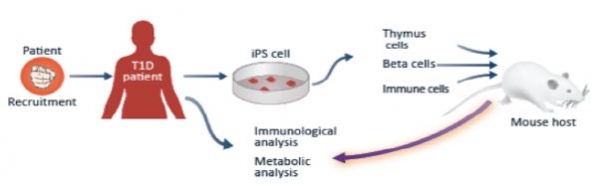
- Cell replacement therapy: Cell replacement therapy utilising stem cells is a cutting-edge approach in regenerative medicine. This approach has been widely used in treating type 1 diabetes and, in some cases, type 2 diabetes. Stem cells are differentiated into insulin-producing beta cells. In type 1 diabetes, where the immune system destroys these beta cells, stem cell therapy seeks to replace the lost cells, potentially restoring the body's ability to regulate blood sugar levels naturally. While still in the experimental stage, ongoing research and clinical trials hold promise for developing safe and effective stem cell-based treatments that could transform diabetes management, reduce the need for insulin injections, and improve the quality of life for individuals living with diabetes.
Fig. 2: After the successful in vivo experiments, iPSCs are cultured in vitro and given to patients.
Also, in conditions like age-related macular degeneration and retinitis pigmentosa, the loss of photoreceptor cells leads to vision impairment or blindness. Stem cell therapy involves the transplantation of lab-grown photoreceptor cells into the damaged retina, with the goal of replacing the lost cells and restoring vision. iPSCs derived from patients' cells are used to create disease models for drug testing and understanding disease mechanisms. This approach accelerates drug development and personalises treatment strategies.
Advancements in stem cell therapies
The future of stem cell therapies seems very promising. iPSC technology continues to improve, enhancing the scalability and reliability of patient-specific stem cell therapies. The combination of stem cells and 3D bioprinting holds potential for creating functional, transplantable organs. Stem cell research is shedding light on the mechanisms of aging and offering strategies for extending health and lifespan.
Ethical considerations
Using stem cells for research brings in many ethical considerations, especially when you are working with embryonic stem cells, as one needs to destroy an embryo to isolate stem cells. However, alternative approaches, such as iPSCs, have addressed some of these concerns. Obtaining informed consent for stem cell procedures is essential, and patient privacy and data protection must be ensured.
Conclusion
Stem cell-based therapies represent a paradigm shift in medicine, offering unprecedented opportunities to treat diseases, regenerate tissues, and understand complex medical conditions. While ethical considerations and technical challenges remain, the field is advancing rapidly, with the potential to transform healthcare and improve the quality of life for millions of people worldwide. As research continues and regulatory frameworks evolve, the promise of stem cell-based therapies continues to grow, opening new frontiers in medicine and reshaping our approach to health and disease.
MD: Stem cell-based therapies hold great potential for treating a variety of medical conditions. Discover the benefits, applications, and current advancements in this exciting field of regenerative medicine.
 A story of Glucose, Insulin and Cancer Cell Growth
 Basics of Behavioural Genetics
 Benign vs. Malignant Tumors: Understanding the Critical Distinction